Chosen theme: Comparing New Drones for Landscape Photography. Welcome! Dive into field-tested insights, real stories, and practical comparisons that help you pick the right aircraft for sweeping vistas, tricky light, and unforgettable horizons. Subscribe to stay updated with our next head-to-head tests.
Field Trial at Sunrise: Three Drones, One Ridgeline
In the blue hour, setup speed matters. One controller grabbed satellites in under a minute, another needed recalibration after a case bump, and the third struggled with cold batteries. What’s your pre-flight checklist for winter starts?
Image Quality Showdown: RAW Depth, Color, and Detail
RAW flexibility in deep shadows and bright clouds
Pushing +2.5 EV revealed subtle differences: top sensors kept shadow color neutral, while smaller chips showed magenta shifts and pattern noise. Highlights clipped earlier on compact models, making careful exposure and bracketing vital in glowing cloud layers.
Color science across the golden-to-blue transition
As the sun crested, some profiles leaned warm-yellow while others skewed cyan in the shadows. Locking manual Kelvin stabilized results, but we still noted green-magenta bias changes. Calibrating with a gray card saved grading time later.
Sharpness, noise reduction, and preserving texture
In-camera sharpening differs—some defaults exaggerate edges in pine needles, creating halos. We dialed sharpness down and compared true detail retention. The best results balanced micro-contrast with restrained noise reduction to keep granite textures believable.
Range, Signal, and Safety: The Invisible Backbone
Signal retention in complex, line-of-sight-challenging terrain
We flew across a saddle to test signal resilience. Orientation of controller antennas mattered more than we expected, and a small lateral move restored clarity. Remember: true visual line of sight and smart positioning beat power alone.
Wide-angle vision sensors helped skirt cliff faces, but backlit rock occasionally triggered ghost warnings. Downward sensors remained reliable over grass and gravel, yet glare off wet stone caused momentary jitters. Practice manual finesse as a safety net.
With rising valley winds, an intelligent RTH updated speed and altitude to save battery. Another unit stuck to a straight-line climb and burned power early. Always set an RTH altitude that clears terrain and review the path beforehand.
Wind, Weather, and Flight Time: Where Numbers Meet Nature
Battery endurance versus brochure claims
Expect 20–25% less airtime than advertised when hovering in wind or filming continuous video. Cold mornings shaved minutes from every pack until we warmed spares in inner pockets. Plan a conservative reserve to protect the gear and the shot.
Workflow, Apps, and Ecosystems: The Unseen Time-Savers
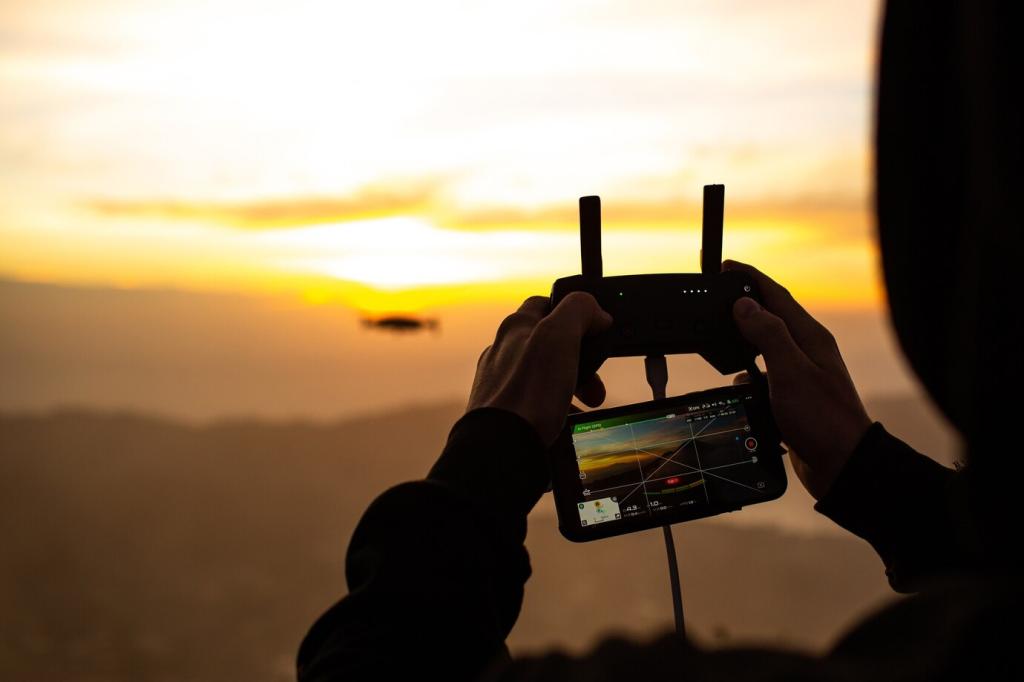
Fast boot times, offline maps, and a clear histogram made composition calmer. One app nagged for updates without signal, another logged flight notes neatly. Customizable function buttons for gimbal pitch and exposure were decisive in changing light.
Workflow, Apps, and Ecosystems: The Unseen Time-Savers
Strong ND and polarizer sets, a foldable landing pad for scrubby ground, and a multi-charger streamlined our day. A compact power bank rescued a dead controller at sunset. What accessories earned a permanent spot in your pack?